


TXMC391

Conduction Cooled, 4 Channel 1000BASE-KX Ethernet

  • Conduction Cooled single-width XMC module
  • 4 channel 1000BASE-KX
  • IPMI resource: FRU hardware definition information stored in on-board EEPROM
  • PXE and iSCSI boot (16 Mbit serial flash)
  • IEEE 1588/802.1AS Precision Time Protocol (PTP) and IEEE 802.1Qav Audio/Video Bridging (AVB) traffic shaping
  • Rear I/O via P16 – All channels mapped in X12d range (VITA 46.9)

Product status: Active

Operating Temperature Range -40 °C to +85 °C RoHS compliant

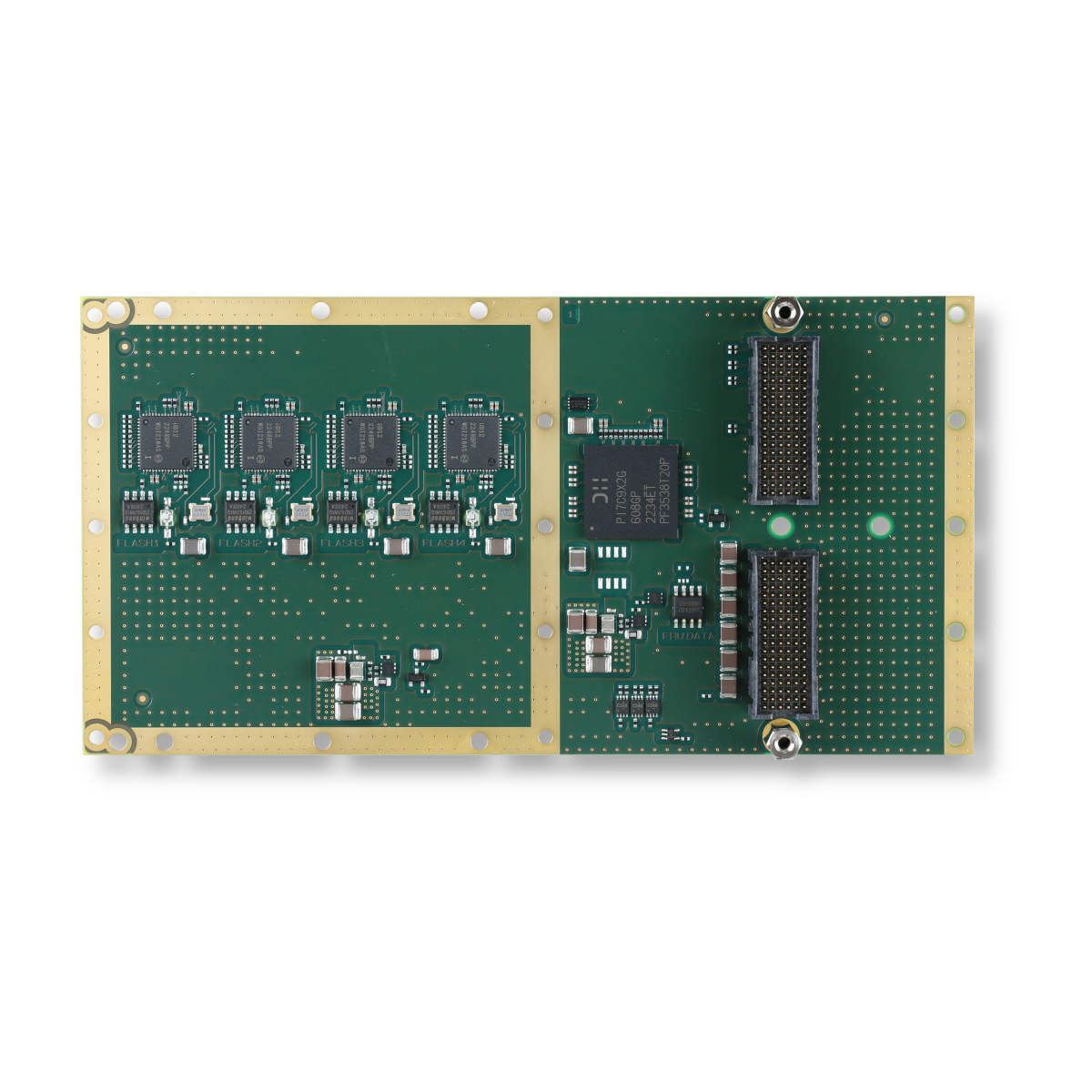
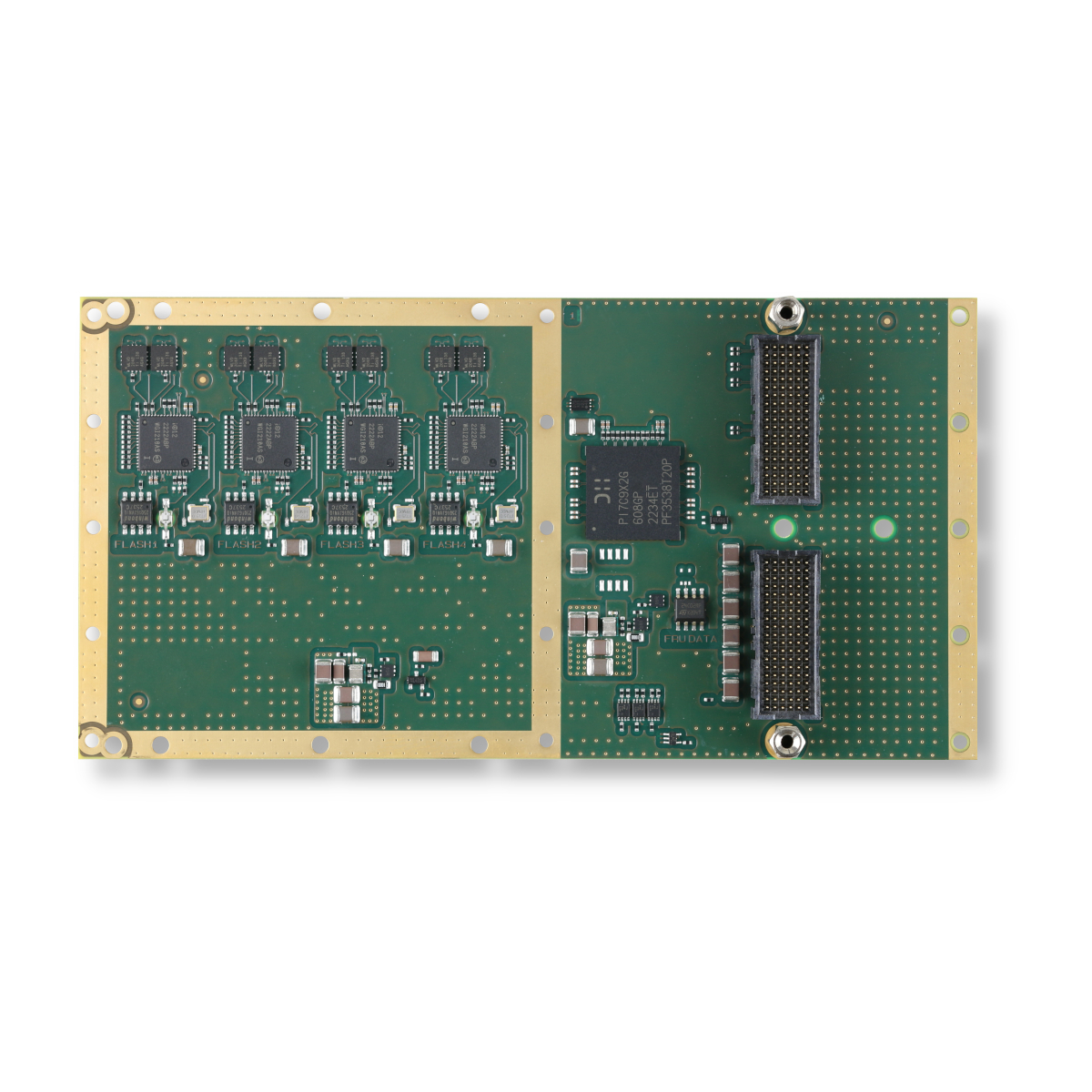
The TXMC391 is a Conduction Cooled Switched Mezzanine Card (CCXMC) compatible module providing a four channel 1000Base-KX Ethernet interface.

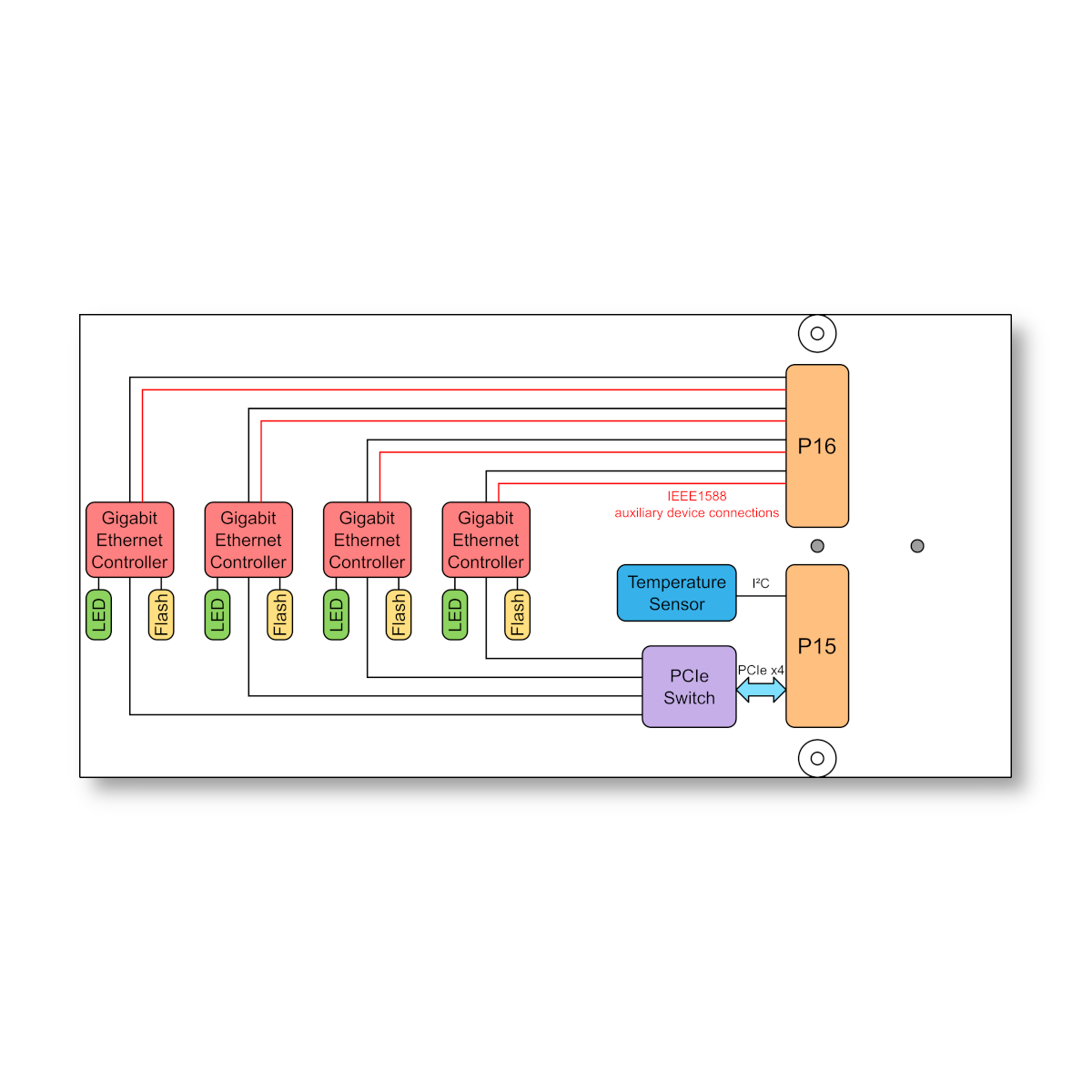
A PCIe Switch provides access to the Intel I210IS Gigabit Ethernet controllers. Each Ethernet interface supports 1000 Mbit/s transmission rate and is equipped with a 16 Mbit Serial Flash to support PXE and iSCSI boot.

The TXMC391 routes four Ethernet ports to the Back I/O P16 connector. All ports are mapped in the X12d range specified in VITA46.9 standard.

LEDs on the board indicate the different network activities.

The TXMC391 supports IEEE 1588/802.1AS Precision Time Protocol (PTP) and IEEE 802.1Qav Audio/Video Bridging (AVB) traffic shaping (with software extensions).

The SDP (Software Definable Pins) of each Ethernet Controller are connected to the Back I/O P16 connector for IEEE 1588 auxiliary device connections.

The TXMC391-10R routes these SDP directly to the Back I/O P16 connector. The TXMC391-20R has M-LVDS Transceivers between the Ethernet Controllers’ SDP and the Back I/O P16 connector to allow differential IEEE 1588 auxiliary device connections, the direction of these Transceivers is configured by the SDP.

The TXMC391 has an I²C board temperature sensor to facilitate measurement of the board heat near the Primary Thermal Interface of the Conduction Cooled Frame.

The module meets the requirements to operate in extended temperature range from -40 °C to +85 °C (Card Edge Temperature).

Software Support:

  • Software support for Intel I210IS at intel.com
  • For operating systems not supported by Intel®, please contact TEWS.
Mechanical Interface Conduction Cooled Switched Mezzanine Card (CCXMC) Interface conforming to ANSI/VITA 42.0 and ANSI/VITA 20

Standard single-width (143.75 mm x 74 mm)

Electrical Interface x4 PCI Express (Specification 2.1) compliant interface conforming to ANSI/VITA 42.3
PCIe Switch PI7C9X2G608GP (Diodes Incorporated)
Gigabit Ethernet Controllers For each interface: I210-IS (Intel)
16 Mbit Serial Flashes for Boot ROM For each interface: W25Q16JV (Winbond)
Temperature Sensor PCT2075 (NXP Semiconductors)
FRU Records EEPROM M24C02-R (STMicroelectronics)
M-LVDS Transceivers (TXMC391-20R) SN65MLVD204B (Texas Instruments)
Number of Channels 4
I/O Standard 1000Base-KX
I/O Connector Back I/O P16 (Samtec ASP-103614-04 or compatible)

All ports mapped in X12d range (VITA 46.9)

Power Requirements 650mA typical @ VPWR = +5V (four channel, no link)

300mA typical @ VPWR = +12V (four channel, no link)

Temperature Range Operating: -40 °C to +85 °C (Card Edge Temperature)

Storage: -40 °C to +85 °C

MTBF 1) 908000 h to 943000 h

MTBF values shown are based on calculation according to MIL-HDBK-217F and MIL-HDBK-217F Notice 2; Environment: GB 20°C.

The MTBF calculation is based on component FIT rates provided by the component suppliers. If FIT rates are not available, MIL-HDBK-217F and MIL-HDBK-217F Notice 2 formulas are used for FIT rate calculation.

Humidity 5 – 95% non-condensing
Weight 63 g


1) depends on variant, for further details see User Manual

PRODUCT VARIATIONS

TXMC391-10R

4 Channel 1000BASE-KX Ethernet

4 Channel 1000BASE-KX Ethernet; P16 Back I/O (X12d); Conduction Cooled; IEEE 1588 auxiliary devices via single-ended Back I/O

TXMC391-20R

4 Channel 1000BASE-KX Ethernet

4 Channel 1000BASE-KX Ethernet; P16 Back I/O (X12d); Conduction Cooled; IEEE 1588 auxiliary devices via differential Back I/O

SOFTWARE

Third Party Device Driver Support

Data Sheet

Data Sheet

Data Sheet - Issue 1.0.1

User Manual

User Manual

User Manual - Issue 1.0.1