
TEWS Technologies Introduces Industry’s First Dedicated VPX Carrier for VITA 93 QMC Modules
SOSA® aligned TVPX210 establishes a new integration path for QMC modules and strengthens TEWS Technologies’ leadership in the VITA 93 QMC market
TEWS Technologies today introduced the TVPX210, the industry’s first dedicated VPX carrier for VITA 93 QMC modules. The SOSA® aligned 3U VPX carrier enables defense and aerospace system developers to configure application-specific I/O with commercial off-the-shelf QMC modules while retaining a common VPX carrier design. TEWS Technologies offers an extensive portfolio of QMC modules covering a broad range of functionalities like analog and digital I/O, serial communication, networking, CAN and FPGA user-defined functions.
The TVPX210 provides three single-width QMC sites. Designers can populate them with up to three single-width modules, a double-width module and a single-width module, or one triple-width module. This flexibility allows customers to adapt I/O functions to different mission requirements without redesigning the carrier hardware and reduce development cost
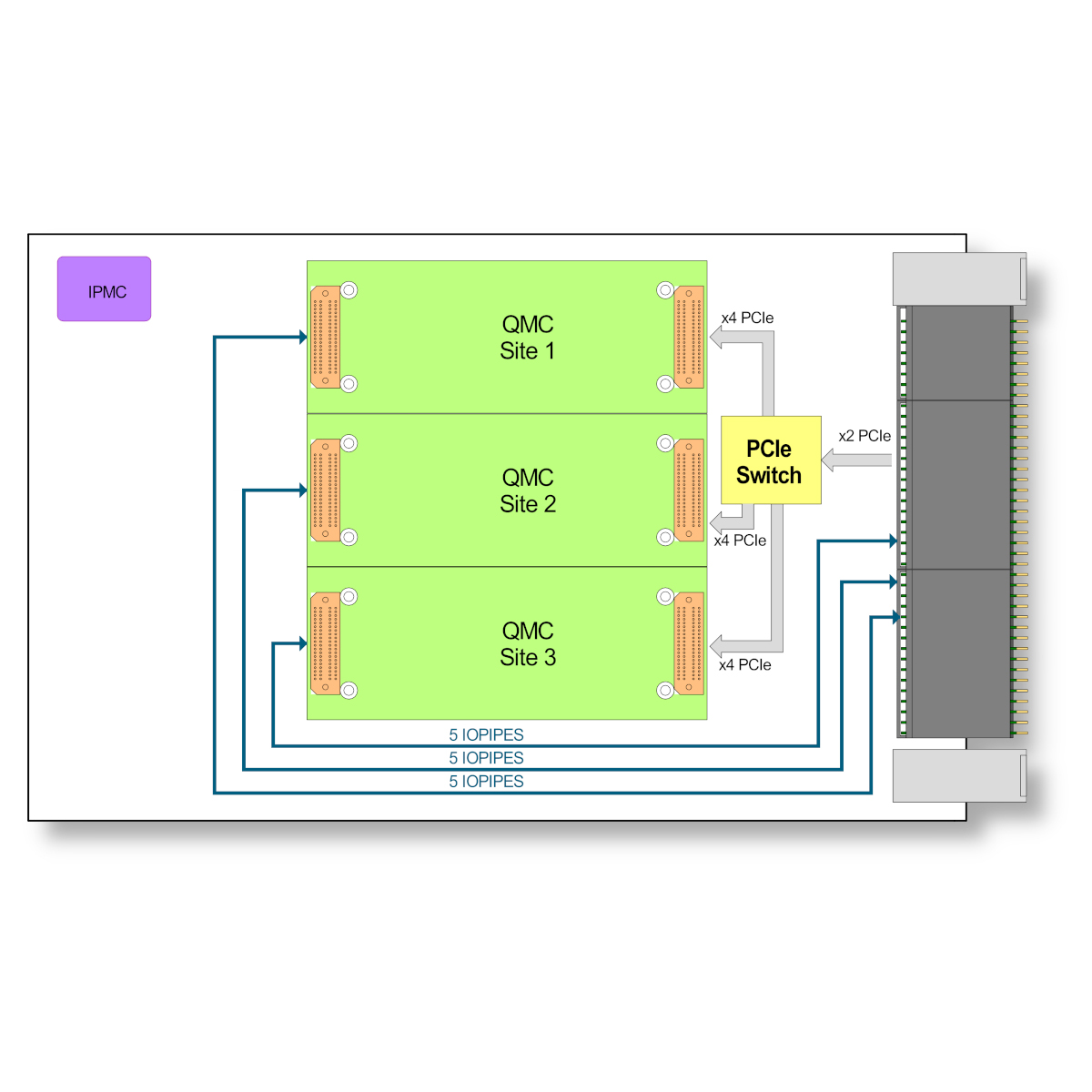
A non-blocking PCI Express Gen3 switch distributes the host interface across the three QMC sites. Each site has PCIe Gen3 x4 connectivity, allowing multiple high-bandwidth modules to operate at the same time. QMC I/O is routed to the VPX P1 and P2 rear connectors for implementation through the system backplane or a transition card without additional front-panel cabling.
The SOSA® aligned carrier implements the SLT3-PAY-2U2U-14.2.17 payload slot profile and includes a VITA 46.11 compatible management controller. The controller supports health monitoring, inventory management, and communication with the VPX System Manager.
The TVPX210 is offered as conduction cooled carrier with VPX REDI implementation according to ANSI/VITA 48.2.
“As the industry’s first dedicated VPX carrier for QMC modules, the TVPX210 is an important step in the adoption of VITA 93,” said Tim Tews, General Manager at TEWS Technologies. “Customers can tailor the I/O set for a program and preserve the system architecture as requirements change. This launch strengthens our position as a market leader for the new QMC standard and expands the system-level choices available to VPX designers.”